Jewellery Made from Coffee Grounds: How Coffee-Stone Is Created.
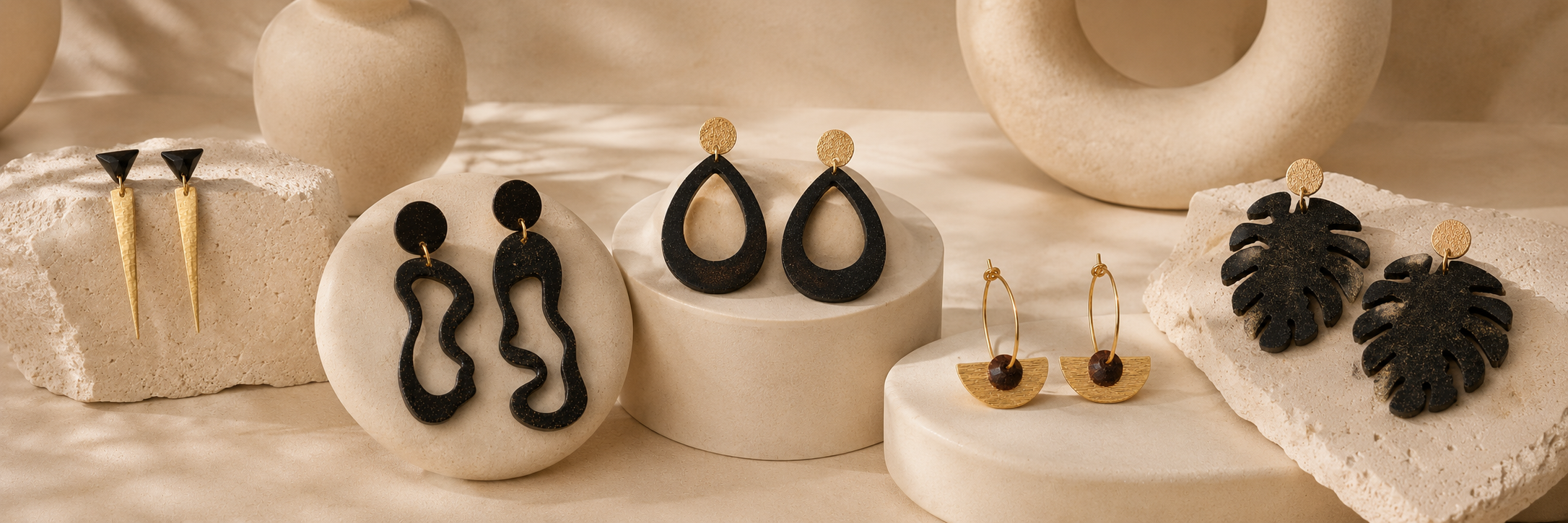
Yes—jewellery really can be made from coffee grounds. Atelier Cayelle transforms used coffee grounds into coffee-stone: an in-house composite mixed with real gold powder and bound with a very small amount of BPA-free resin. Handmade in Melbourne, the material becomes dark, tactile and lightweight, with tiny shifts of gold that catch the light.
It is coffee, but recast as a design material. And no, it does not smell like your morning flat white. Sadly!
What exactly is coffee-stone?
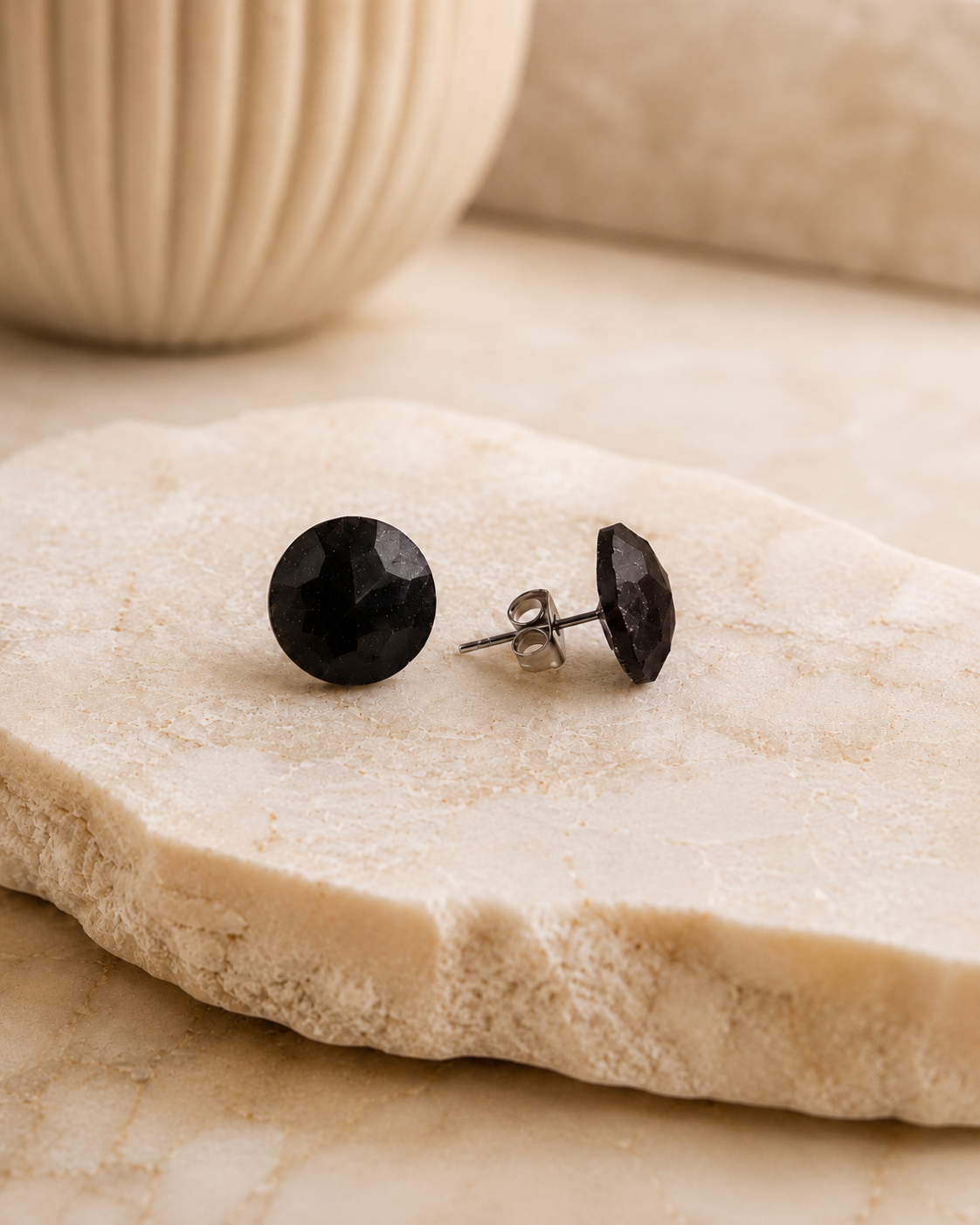
Coffee-stone is Atelier Cayelle’s name for a solid handmade composite made with recycled coffee grounds, real gold powder and a very small amount of BPA-free resin used as a binder. The gold powder is mixed through the material—it is not simply dusted over the surface at the end.
The finished material has a deep espresso tone, a mineral-like presence and tiny golden reflections. Depending on the design, it can be faceted, smooth, graphic or softly organic. It looks substantial. It is surprisingly light. That contrast is part of its charm—and makes this jewellery made from recycled materials feel like design, not a lesson in recycling.
From a coffee table to jewellery
Coffee-stone did not begin as a jewellery trend.
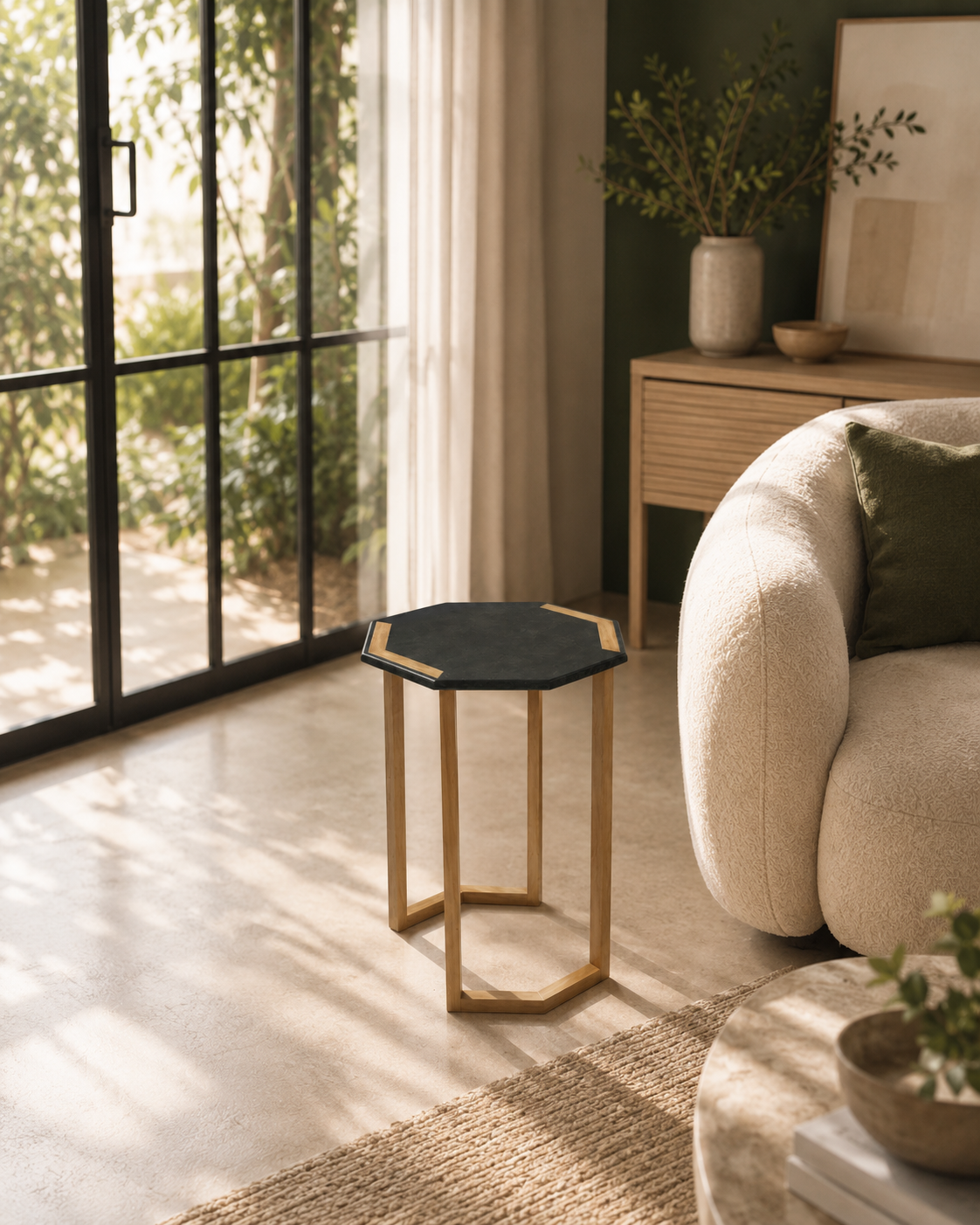
It began in 2015, while Atelier Cayelle founder Marie Lefebvre was studying Furniture Design at RMIT in Melbourne. The brief was to “turn a waste into a want.” Used coffee grounds became the starting point for a coffee table—because apparently a coffee on the table was not enough.
The experiment became a material obsession. After years of testing, refining and failing, the forms became smaller and more sculptural. In 2017, Atelier Cayelle Jewellery was born. The scale changed; the idea did not: take an everyday material that is usually discarded and make it worth keeping.
Read the full founder story on Atelier Cayelle’s Our Story page.
How are coffee grounds turned into jewellery?
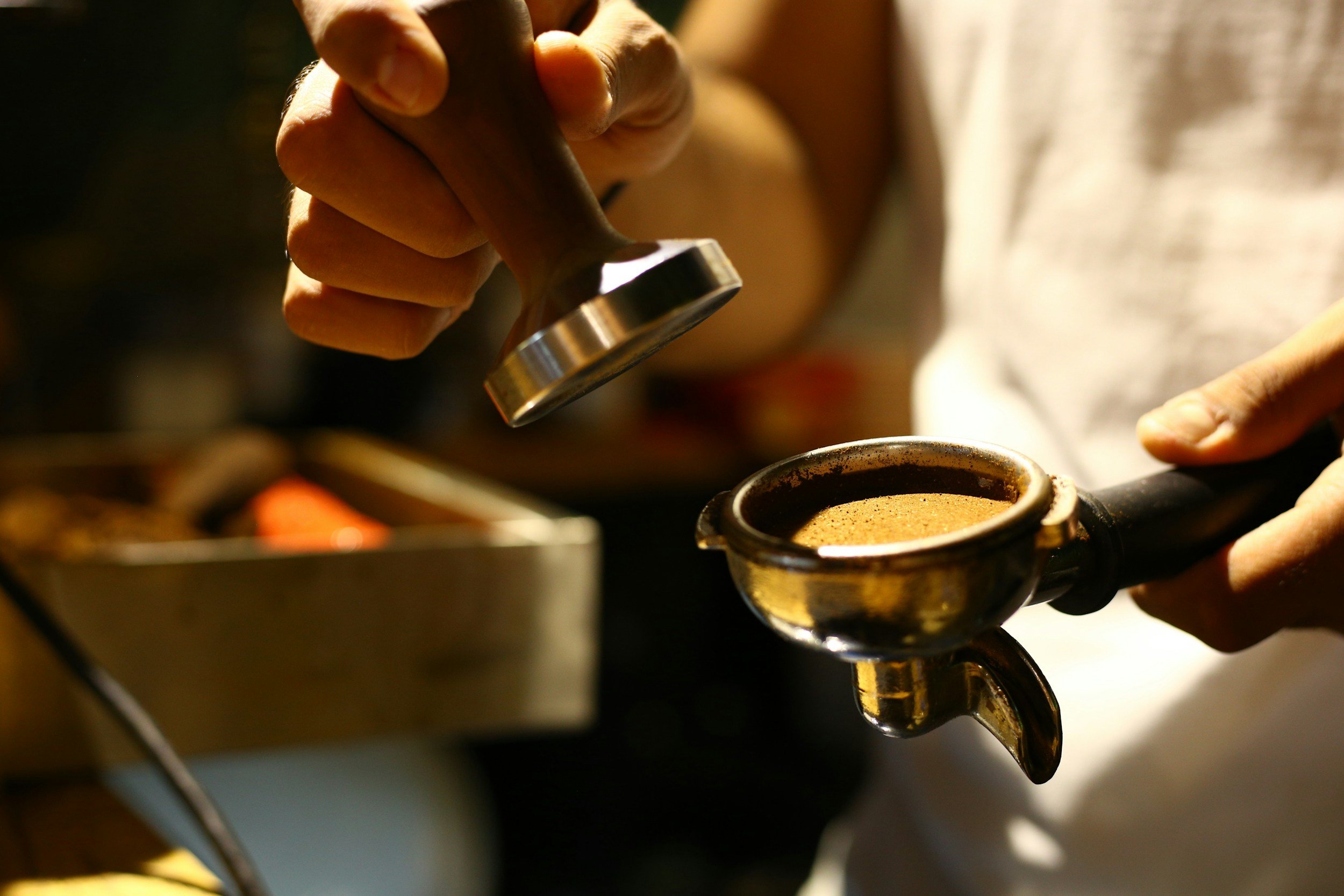
It starts with a coffee
The grounds have already brewed someone’s espresso, long black or flat white. Atelier Cayelle collects used coffee grounds rather than starting with a new raw material.
The grounds are prepared
Freshly used grounds contain moisture, so they are dried and prepared before becoming part of a stable composite. This stage turns a short-lived café by-product into a workable material ingredient.
Coffee meets real gold powder
Often, the prepared grounds are combined with real gold powder as the coffee-stone is made. Because the gold is mixed through the material, it appears as fine, irregular glints rather than a uniform metallic coating.
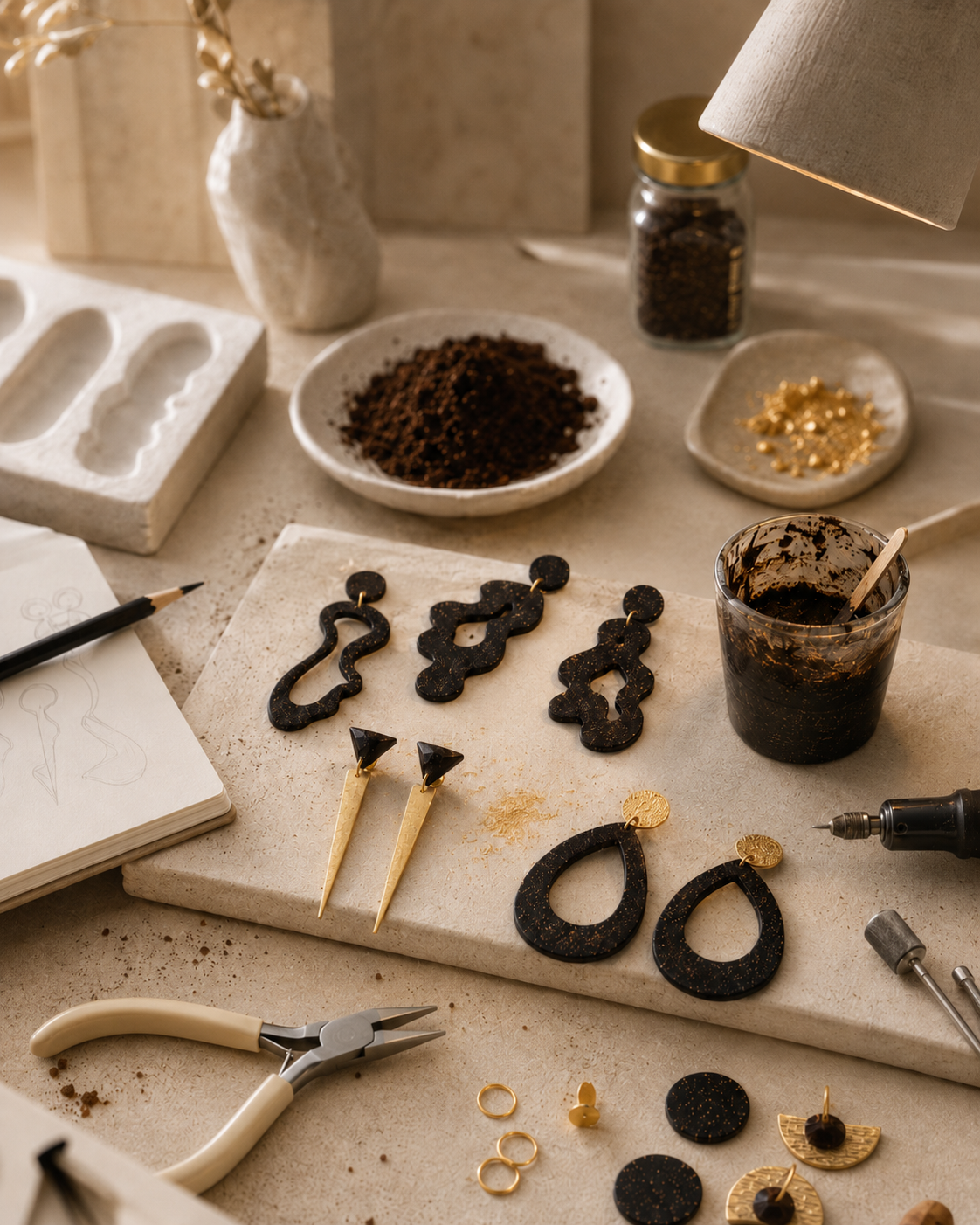
A small amount of resin binds it together
Coffee-stone does contain bio resin: a very small amount is used to bind the material. Atelier Cayelle uses a BPA-free resin made from a by-product of the oil industry. Through a low-energy, handmade process, the ingredients are transformed into durable pieces designed for everyday use.
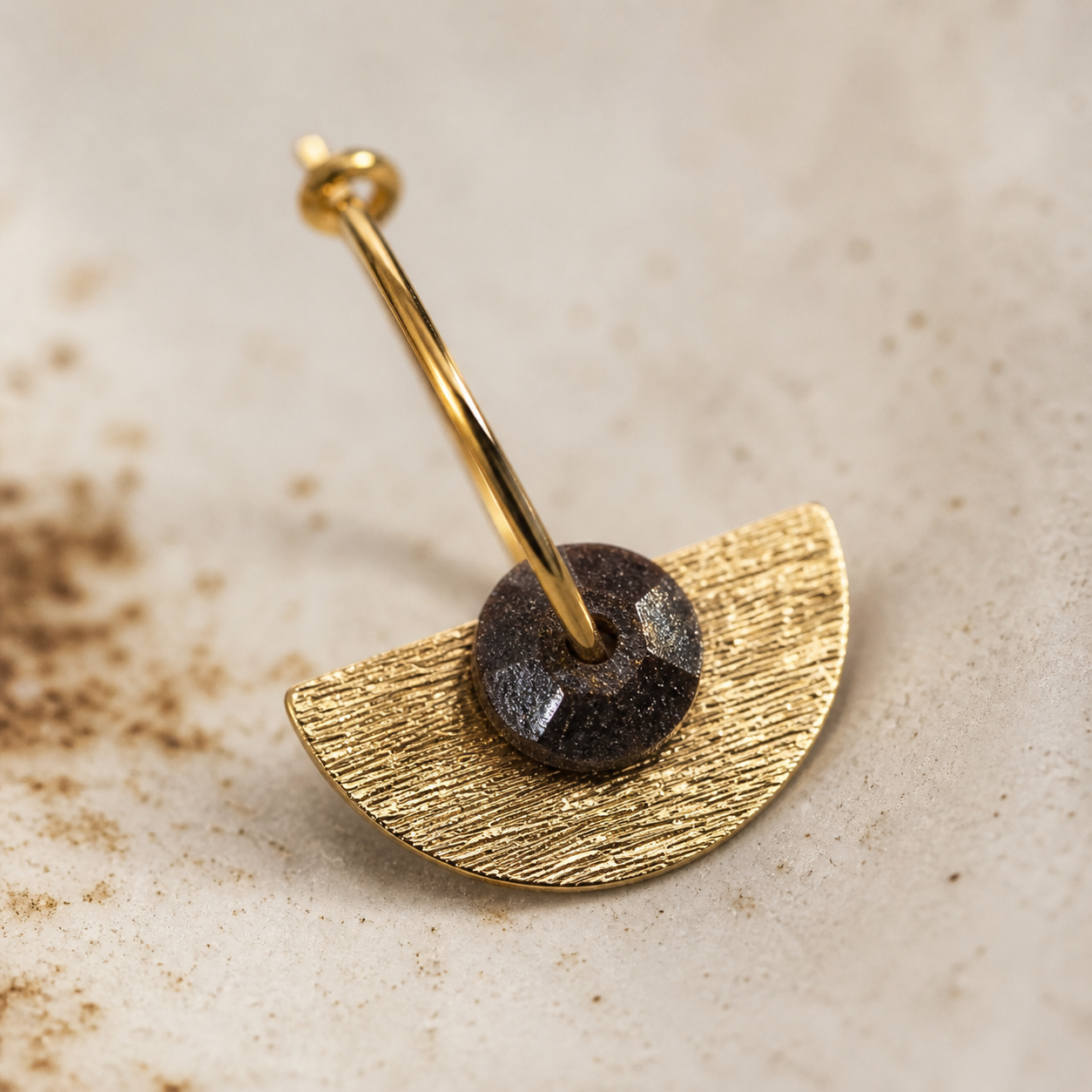
The composite is shaped and finished
Coffee-stone is shaped into the forms required by each design, then finished to reveal its depth, texture and golden detail. A small round Ristretto stud and a graphic Goldies triangle begin with the same signature material, but their geometry gives the surface a very different character.
The jewellery is assembled in Melbourne
The finished coffee-stone elements are assembled in small batches with carefully selected findings. Those findings vary by design and may be surgical steel and/or 18K gold-plated, so the exact components should always be checked on the individual product page.
Variation stays in the design
Coffee grounds are not an anonymous industrial pigment, and the material is made by hand. Tiny changes in tone, texture and gold detail remain visible from one piece to the next. No two pieces are exactly identical—and they are not trying to be.
Why use recycled coffee grounds?
First, because they are visually interesting. Coffee brings a warm, deep colour and an organic texture that does not need to pretend to be conventional stone. Mixed with gold, it becomes dark but not flat—small reflections move across the surface as the piece moves.
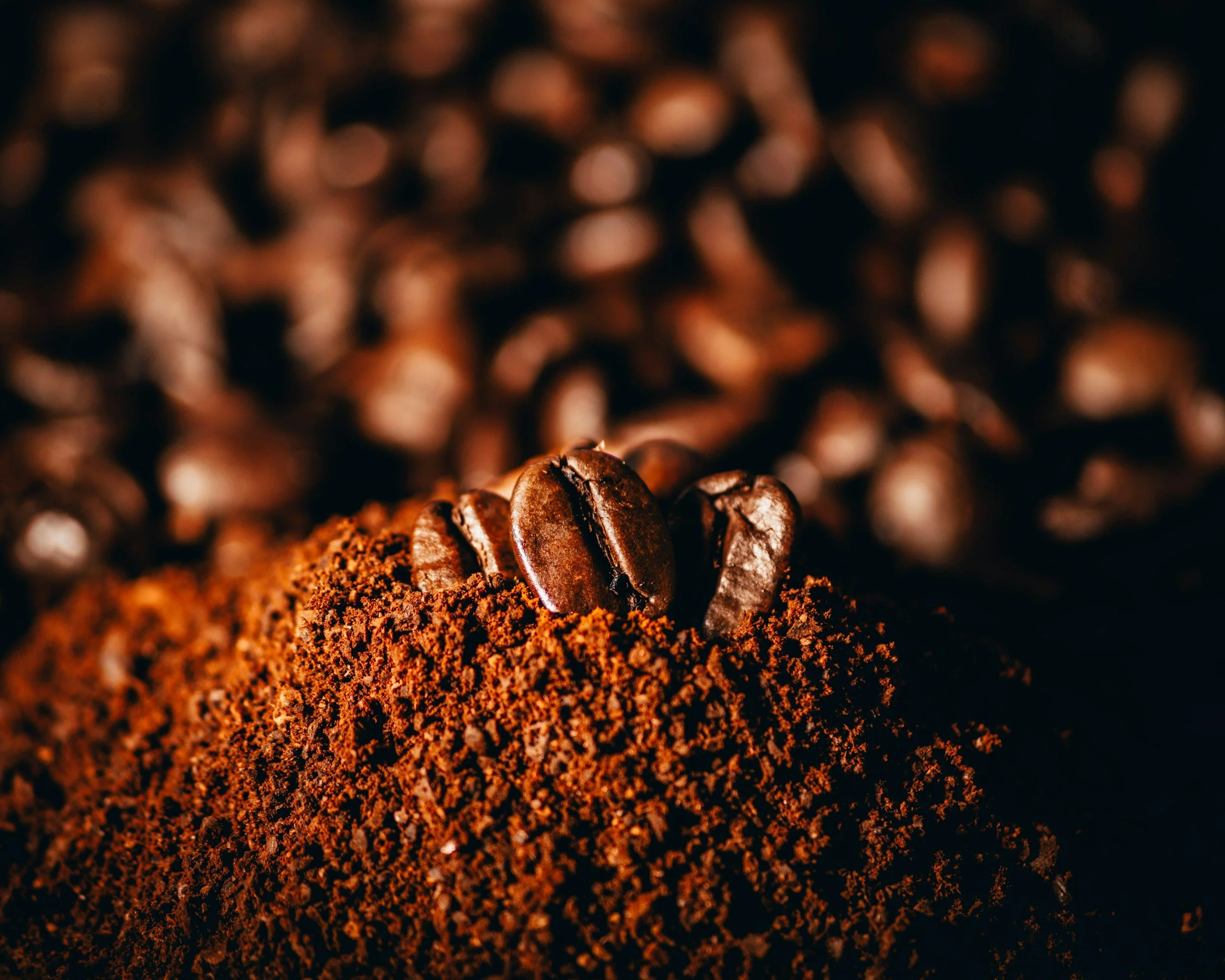
Second, because coffee grounds are abundant, especially in Melbourne!
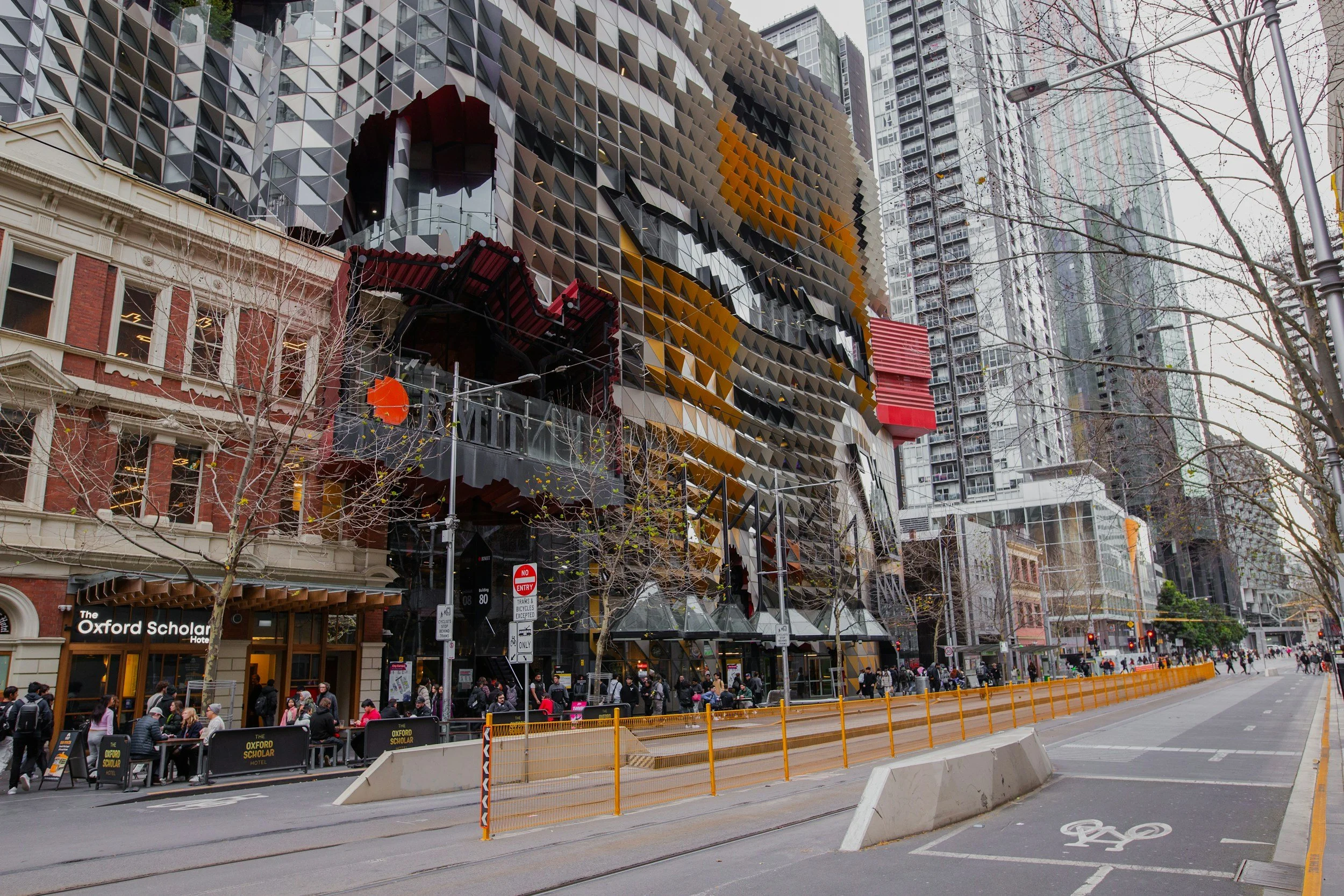
RMIT University reports that Australia generates about 75 million kilograms of ground coffee waste each year, with most of it going to landfill. RMIT engineers have even turned spent coffee grounds into biochar for stronger concrete. Melbourne has apparently decided coffee should work a second shift.
Source: RMIT University, “Coffee offers performance boost for concrete”
Third, because keeping a material in use is more interesting than treating it as the end of a story. The Australian Government’s National Food Waste Strategy notes that food waste in landfill contributes to greenhouse-gas emissions and describes repurposing resources as part of a circular-economy approach.
Source: Australian Government, National Food Waste Strategy
What does coffee-stone look and feel like?
From a distance, coffee-stone can read like a dark mineral or a tiny piece of night sky. Up close, the coffee tone, handmade texture and gold powder become visible. Faceted forms catch sharper highlights; smoother designs reveal softer shifts in depth.
That visual presence is paired with low weight. The material creates large, sculptural forms without the heaviness someone might expect from a comparable solid piece of stone, metal or clay.
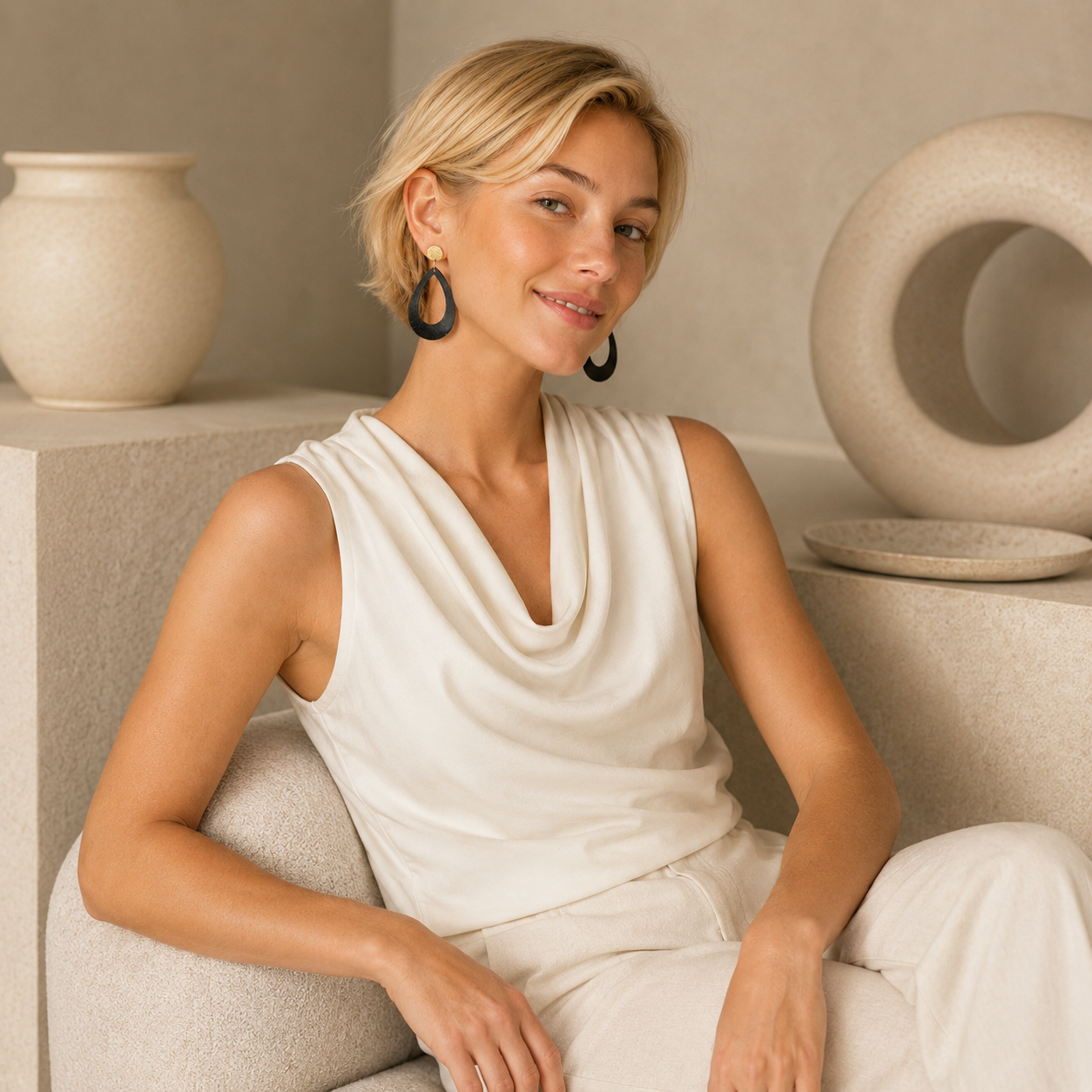
Lightweight by design
Atelier Cayelle statement pieces are surprisingly lightweight. From small coffee-ground earrings to larger sculptural forms, the material creates a strong, dark and sparkly presence without the weight people may expect from solid stone, metal or clay.
For real pair weights, per-ear comparisons and practical comfort advice, read How Heavy Is Too Heavy for Earrings?
No lingering coffee smell
No. Once the used grounds have been dried, transformed into coffee-stone and finished as jewellery, the pieces do not smell like coffee. They will not make your handbag smell like a café, and they cannot produce an emergency espresso. We checked the important questions.
Made by hand, never exactly identical
Yes, within the intended design. The silhouette and construction remain consistent, while small variations in colour, texture and golden detail come from the handmade material. Those differences are the trace of the process.
Coffee, recast as jewellery
What began as an RMIT material experiment has become handmade jewellery from Melbourne with a recognisable language of dark, gold-flecked forms. The pleasure is in the contradiction: an everyday waste material becomes something sculptural; a strong visual becomes something light enough to wear; yesterday’s coffee becomes tomorrow’s earrings.
DISCOVER COFFEE-STONE JEWELLERY